Why Efficient Lab Dewar Flasks Are the Cornerstone of Cryogenic Storage in Research and Industry
In modern scientific research and industrial production, the application of cryogenic media such as liquid nitrogen (-196°C), liquid argon, and liquid helium has become increasingly widespread. However, cryogenic liquids possess physical characteristics of extreme volatility and extremely low boiling points. Any minor fluctuation in ambient temperature can lead to rapid phase transitions, resulting in the loss of expensive reagents and potential safety hazards.
Technical Challenges of Cryogenic Media Preservation
Laboratories face three core challenges during daily liquid nitrogen usage:
Extreme Gas Expansion Ratio: Liquid nitrogen expands approximately 694 times in volume upon vaporization, generating high pressure in sealed or improper containers.
Heat Conduction and Radiation Losses: Ambient heat continuously penetrates the interior of the container through conduction, convection, and radiation.
Sample Safety Risks: Stem cells, vaccines, genetic samples, and sensitive chemical reagents are highly sensitive to temperature fluctuations. Any unexpected cooling failure can destroy months of research outcomes.
Working Principle and Insulation Technology of Lab Dewar Flasks
Efficient Lab Dewar Flasks isolate heat transfer through precise physical structures. The core construction relies on a double-walled container interlayer design:
High Vacuum Interlayer: Air between the two walls is evacuated to eliminate heat conduction caused by gas molecule convection.
Multi-Layer Insulation (MLI): High-reflectivity aluminum foil and low-thermal-conductivity insulating paper are wrapped alternately within the vacuum interlayer to significantly block thermal radiation.
Low Evaporation Rate (NER) Control: Thermal bridging effects are minimized by optimizing the length and material of the neck tube.
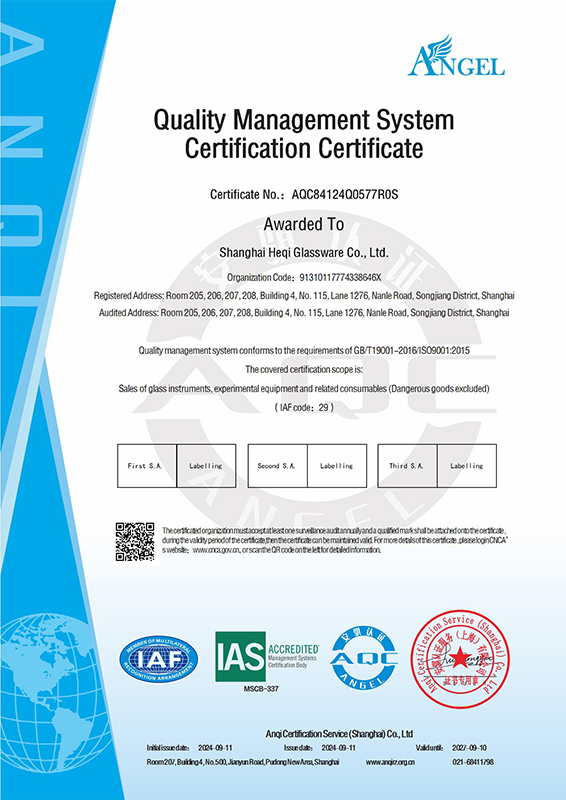
As an industry pioneer with years of experience in standardized glass instruments and scientific equipment, Shanghai Heqi Glassware Co., Ltd. has accumulated extensive expertise in fluid control, vacuum sealing, and cryogenic reaction system development. Leveraging mechanized and line-industrialized manufacturing across production bases in Songjiang, Chengdu, Jiaxing, and Yancheng, Shanghai Heqi Glassware Co., Ltd. has successfully elevated traditional craftsmanship into high-precision standardized manufacturing, ensuring that every Lab Dewar Flasks and matching equipment set meets rigorous industrial standards for evaporation rates and structural durability.
Core Classifications and Structural Analysis: Choosing the Right Lab Dewar Flasks for Your Operations
When selecting Lab Dewar Flasks, matching materials and functional structures must be chosen according to specific media types, access frequencies, and application scenarios.
Material Classification Comparison
Different vessel materials emphasize different mechanical strengths, weights, and chemical compatibility:
| Material Type |
Advantages |
Disadvantages |
Typical Applications |
| Aluminum Alloy |
Lightweight, corrosion-resistant, highly portable |
Lower impact resistance compared to stainless steel |
Frequent mobility inside laboratories, short- to medium-term biological sample storage |
| Stainless Steel |
Extremely high mechanical strength, cGMP cleanroom compliant, heavy-pressure resistant |
Heavier self-weight, relatively higher cost |
Industrial-grade heavy-duty use, large-capacity liquid nitrogen supply systems, clean workshops |
| Borosilicate Glass |
Transparent and visible, superior chemical inertness, acid and alkali resistant |
Fragile, insulation performance limited to small structures |
Small-scale conventional chemical synthesis, low-volume spectroscopy experiments, visual observation |
Shanghai Heqi Glassware Co., Ltd. features specialized workshops for glass processing, metalworking, and assembly. For pilot-scale equipment matching in chemical and pharmaceutical sectors, metal structures and high-borosilicate glass components can be seamlessly integrated to provide custom-tailored Lab Dewar Flasks solutions.
Classification by Function and Application
Liquid Nitrogen Supply/Transfer Type: Equipped with self-pressurizing valve systems, these vessels utilize the pressure generated from minor vaporizations inside the container to transfer liquid nitrogen smoothly to reactors, cold traps, or receiving vessels.
Sample Storage Type: Internal structures are fitted with canisters or freezing racks, focusing on neck insulation and extremely low static daily evaporation rates for long-term cryogenic sample preservation.
Open-Mouth/Shallow Tray Type: Designed with enlarged openings, allowing experimental components, small flasks, or mechanical parts to be directly immersed into liquid nitrogen for rapid flash-freezing.
5 Core Performance Metrics for Evaluating High-Quality Lab Dewar Flasks
Evaluating the quality of Lab Dewar Flasks requires verifying key technical parameters beyond storage capacity:
Static Evaporation Rate (NER, %/Day): The central indicator measuring vacuum insulation efficiency.
Vacuum Retention Lifespan and Getter Quality: Determines long-term insulation stability over years of operation.
Neck Tube Thermal Conductivity and Strength: Directly impacts solid heat conduction loss and neck durability.
Multiple Safety Valves and Rupture Discs: The safety core preventing container overpressure burst.
Compliance Certifications (ISO 9001 / CE / PED): Quality and compliance guarantees for industrial and research applications.
Static Evaporation Rate (NER)
NER is the most critical metric for evaluating vacuum insulation. It indicates the percentage of liquid nitrogen lost per day under static conditions without external loads. A lower NER value directly translates to lower operational gas costs over time.
Vacuum Lifespan and Sealing Craftsmanship
The vacuum interlayer is not an absolute vacuum; metal or glass walls slowly outgas over time. Premium Lab Dewar Flasks incorporate high-performance getters inside the vacuum space to continuously absorb residual gas molecules. Automated electron-beam and laser welding processes reduce weld leakage probability.
Neck Tube Thermal Conductivity and Mechanical Strength
The neck tube is the sole structural bridge connecting the inner vessel to the outer shell. Superior products utilize composite fiber-reinforced plastics (FRP) or specialized alloys with extremely low thermal conductivity to maintain structural integrity while blocking heat paths.
Safety Protection and Pressure Control Systems
For pressurized vessels, dual safety valve designs (primary and secondary safety valves) along with rupture discs are essential. In case of system overpressure, multi-stage pressure relief operates automatically to prevent physical bursting.
Specification Parameter Reference
| Capacity (L) |
Neck Diameter (mm) |
Outer Diameter (mm) |
Total Height (mm) |
Static Evaporation Rate (L/d) |
Static Holding Time (Days) |
| 10 L |
50 |
304 |
550 |
0.09 |
110 |
| 20 L |
50 |
394 |
670 |
0.10 |
200 |
| 30 L |
80 |
446 |
705 |
0.18 |
166 |
| 50 L |
125 |
500 |
810 |
0.35 |
142 |
(Note: The above data represents typical physical parameters under standard experimental environments; actual performance varies with ambient temperature and opening frequency.)
Standard Operating Procedures and Safety Protocols for Lab Dewar Flasks
To extend the operational lifespan of Lab Dewar Flasks and protect laboratory personnel, strict SOP protocols must be followed: Inspection and Pre-cooling → Safe Filling → Standardized Access → Maintenance and Defrosting.
Inspection and Preparation for Lab Dewar Flasks
Visual Inspection: Check the outer shell for dents, corrosion, or scratches prior to filling. Inspect the neck tube and ensure the neck plug is undamaged.
Pre-cooling Process: For first-time use or Lab Dewar Flasks left dry for extended periods, slowly introduce a small amount of liquid nitrogen and allow it to stand for 15-20 minutes to pre-cool. High-flow filling must be avoided to prevent thermal shock from damaging inner vessel welds.
Filling Techniques for Lab Dewar Flasks
Controlled Flow Rate: Use dedicated transfer hoses with anti-splash nozzles, opening the supply valve gradually.
Prevent Overfilling: Liquid volume should never exceed the maximum fill level (leaving a 5%-10% vapor space). Overfilling brings liquid nitrogen into direct contact with the neck plug, degrading insulation and freezing the plug.
Sample Transfer and Storage Operations in Lab Dewar Flasks
Phase Storage Selection: Samples without cross-contamination concerns can be immersed directly in the liquid phase. For viral or hazardous biological specimens, storage in the upper vapor phase (maintaining temperatures below -150°C) is recommended.
Canister Management: Handle canisters swiftly within the neck area. Avoid keeping canisters near the opening for extended periods to prevent moist air from entering and creating ice blockages.
Maintenance and Inspection for Lab Dewar Flasks
Monitoring Daily Evaporation: Keep regular logs of liquid nitrogen consumption using weighing methods or level gauges to catch vacuum degradation early.
Handling Ice Blockages: If frost causes the neck plug to freeze, do not use force. Apply dry warm air (such as a low-heat air blower) to melt the ice, and ensure thorough drying before reopening.
Personal Protective Equipment and Safety Precautions
Cryogenic PPE Standards: Operators must wear EN 511-compliant cryogenic gloves, full-face splash shields, liquid-proof aprons, and closed-toe footwear.
Oxygen Depletion Risk: Vaporizing liquid nitrogen rapidly displaces ambient oxygen. All rooms housing Lab Dewar Flasks must feature forced ventilation and high-precision oxygen monitors (triggering alarms if levels drop below 19.5%).
Building an Efficient Lab Dewar Flasks Supply Chain and Quality Assurance System
When constructing laboratory reaction systems, cooling circulators, or large-scale reagent storage layouts, key vendor evaluation criteria include:
Automated Line Production Capabilities (reduces costs and quality variations)
100% Helium Mass Spectrometer Leak Detection and NER Testing (guarantees performance and service life)
Interdisciplinary R&D Team (integrating glass, metal, and electronic control capabilities)
Comprehensive Support Services ("you make a call, we handle the rest" service commitment)
Automated Line Production Capabilities
Traditional laboratory vessel fabrication relies heavily on manual blow-molding, leading to batch-to-batch variations. Shanghai Heqi Glassware Co., Ltd. has transitioned toward mechanized and line-industrialized manufacturing processes. This industrial evolution lowers production costs while maximizing geometric tolerances and vacuum sealing consistency across every Lab Dewar Flasks.
Strict Factory Quality Inspection Standards
High-quality Lab Dewar Flasks undergo stringent non-destructive testing prior to delivery:
100% Helium Mass Spectrometer Leak Detection: Molecular-level helium gases test vacuum welds for minute leak rates.
48-Hour Static NER Measurement: Vessels are filled with liquid nitrogen to measure and log static evaporation performance against strict specs before release.
Interdisciplinary R&D and Custom Equipment Integration
In complex scientific projects, Lab Dewar Flasks operate alongside glass reactors, rotary evaporators, temperature circulators, and vacuum pumps. Shanghai Heqi Glassware Co., Ltd. brings together experts in chemical R&D, mechanical design, and electronic controls. Backed by dedicated glass, metalworking, and assembly workshops, the company delivers customized Lab Dewar Flasks interfaces, automated level sensors, and small-to-pilot-scale complete equipment solutions.
Comprehensive Support System
Fulfilling its service commitment, "you make a call, we handle the rest," Shanghai Heqi Glassware Co., Ltd. maintains robust inventory reserves and fast logistics. Beyond manufactured Lab Dewar Flasks and reaction equipment, the company integrates high-quality glass instruments, lab consumables, and experimental equipment from global brands to provide full client support.
Frequently Asked Questions and Knowledge Base
What custom options are available when ordering custom Lab Dewar Flasks?
Answer: Customization parameters can be tailored for specific experimental environments, including:
Vessel Geometry: Adjusting outer diameter and height for compact instrument compartments.
Ports and Piping: Adding flanges, quick-connect fittings, armored temperature sensor ports, or level probes.
Material Upgrades: Utilizing 304 or 316L stainless steel for corrosive conditions, or high-borosilicate 3.3 glass.
Auxiliary Components: Integrating self-pressurization systems, shock-absorbing bases, or roller carts.
How can one quickly identify if a Lab Dewar Flasks has lost its vacuum seal?
Answer: When the vacuum layer fails, thermal insulation drops immediately, exhibiting these symptoms:
Outer Shell Frosting or Sweating: Heavy condensation or frost appears on the outer casing after filling, showing direct heat conduction to the outer wall.
Rapid Liquid Nitrogen Loss: Filled liquid nitrogen boils off completely within hours, releasing thick white plumes from the neck.
Acoustic Changes: Tapping the outer metal wall produces an altered resonance sound compared to normal conditions.
Why must the opening of Lab Dewar Flasks never be completely sealed during liquid nitrogen storage?
Answer: Liquid nitrogen exhibits a gas expansion ratio of 1:694 at room temperature. Sealing the neck opening with a threaded cap or solid stopper causes vaporized gas to rapidly build internal pressure. Within hours, internal pressure exceeds structural limits, risking a severe physical explosion. Vent-channeled neck plugs or calibrated safety relief valves must always be used.
What are the functional differences between glass Lab Dewar Flasks and stainless steel Lab Dewar Flasks?
Answer:
Glass Dewar Flasks: Primarily used for small-scale chemical synthesis, analytical instrument cold traps, or teaching demonstrations. They offer high chemical inertness, acid/alkali resistance, and visual observation capabilities, but are fragile and unsuitable for high pressure.
Stainless Steel Dewar Flasks: Built for heavy-duty industrial environments, bulk storage, and liquid transfer. Featuring high impact resistance and self-pressurization compatibility, they are widely used in biobanks, semiconductor lines, and large research institutes.
What are the pros and cons of liquid phase versus vapor phase storage for biological samples?
Answer:
Liquid Phase Storage: Samples are submerged in liquid nitrogen (-196°C). Pros include uniform and stable temperature; cons include potential liquid penetration into unsealed vials causing explosion during thaw, along with cross-contamination risks.
Vapor Phase Storage: Samples are suspended above liquid level (-150°C to -180°C). Pros include zero cross-contamination risk and safer handling; cons include minor thermal gradients requiring high vessel insulation uniformity.
What are common factors leading to an increased Daily Evaporation Rate (NER) in Lab Dewar Flasks?
Answer:
Neck Plug Aging: Cold exposure causes neck stoppers to harden, deform, or crack, degrading top thermal insulation.
Vacuum Degradation: Saturated getters or micro-fissures in welds slowly reduce vacuum performance over years.
High Ambient Temperatures or Air Drafts: Placement near direct sunlight, heat-generating machinery, or HVAC vents increases thermal absorption.
Frequent Access: Repeatedly withdrawing canisters draws warm, moist ambient air inside, accelerating boil-off.


 English
 Français
 Español